
From sommelier to export manager to winery owner, Yvonne Chiong Mougin can provide insights into China’s wine scene like few others.
She has worked for top-tier restaurant Jean Georges. For iconic Napa winery Opus One. For LVMH’s Ao Yun winery high in Yunnan’s mountains. And now as partner in Spanish winery Coral Duero. Among many other positions.
In this Q&8, we cover those as well as the impact of tannins on new wine consumers in China, why Spanish wine is performing poorly in this country, why Yunnan terroir is one of a kind, and what to pair with that spicy street food favorite — malatang.
Check out the Q&8 below. And check out dozens of other Q&8s here.
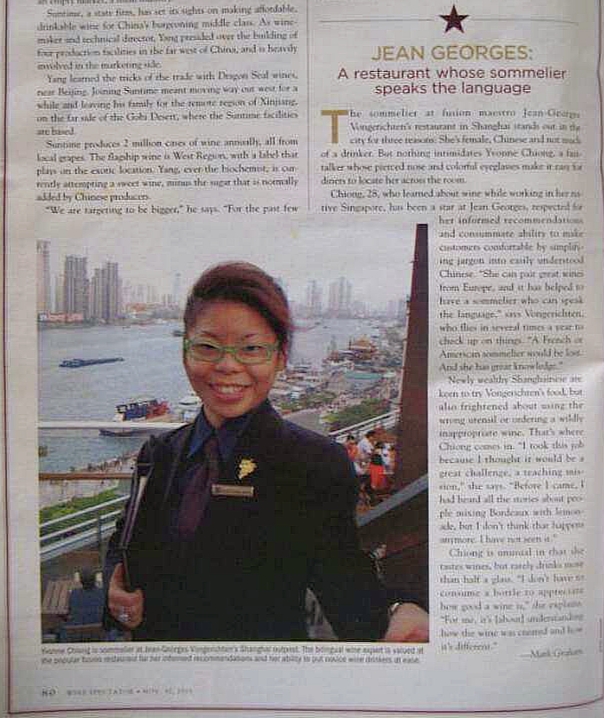
1 You moved from Singapore to Shanghai as a young sommelier over 20 years ago to work at high-end restaurant Jean Georges. What else can you tell us about your “China origin story“!
I arrived in 2003, so it was 23 years ago, and everything was still pretty brand new for me and for the whole wine market in China.
I had to learn to speak the technical language of wine in Mandarin, which wasn’t easy, even though it is my mother tongue.
Building a wine list wasn’t easy, either, as there were not that many suppliers. And I had to train all of the restaurant staff — but I had plenty of fun.
At the time, I think I was the only female sommelier in mainland China, and the youngest one. too. At that tender age, it wasn’t easy to talk to people about wine, to convince consumers.
Arriving on The Bund and having a platform like Jean Georges — a 3-star Michelin French restaurant from New York — was a lot of help.
(Also see the 2008 posts, “New to Town: Getting Started as a Shanghai Sommelier.” Part 1 is here. Part 2 is here.)

2 You got into Chinese fine wine early. I remember tasting Grace Chardonnay from Shanxi with you almost 20 years ago. Then at Wine to Asia in Shenzhen last month, we had that white Marselan by Lige Yuanshan from Ningxia. What is biggest takeaway about Chinese wine after all these years?
I think when I first started in 2003, there was really only Changyu, Great Wall and, of course Grace Vineyard, one of the first real Chinese wineries that I visited. And I got to learn a lot.
I don’t think it was easy for Grace at that time to be a pioneer, with all the challenges they faced in the market. Working with the farmers and trying to make the best wine and hiring Australian and French wine consultants.
It has changed so much. If we look at today, the quality of wines coming from China — and, of course, as you say, that white Marselan — it is incredible.
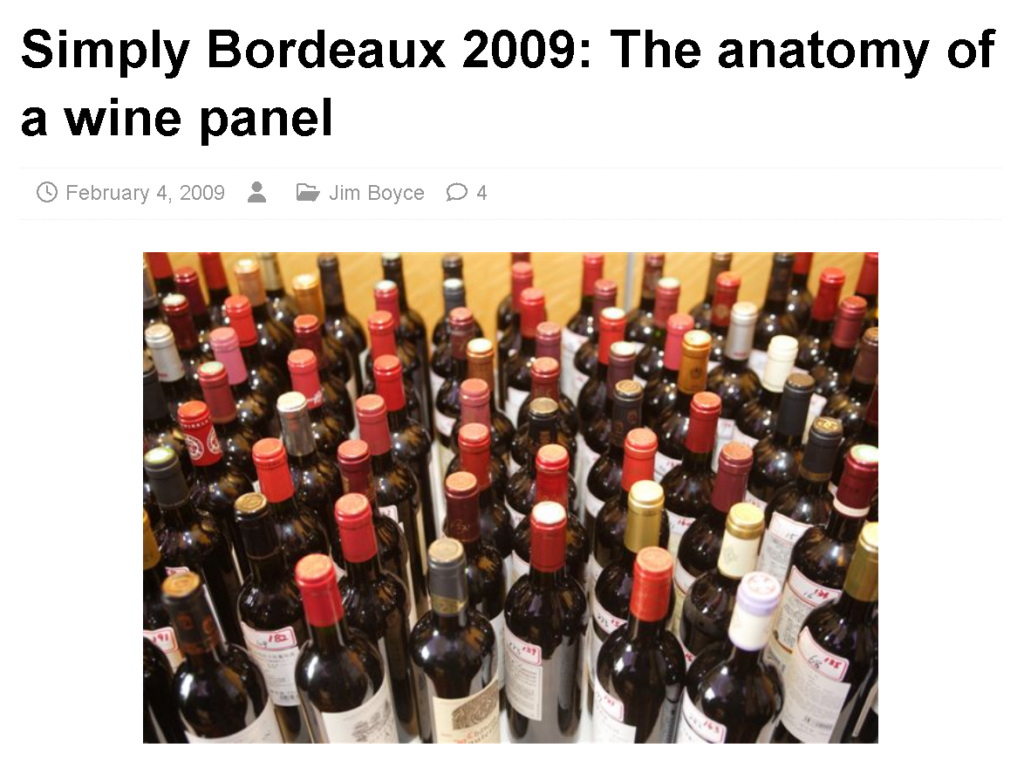
3 In 2009, we tried 340 red Bordeaux wines in three days for a contest in Shanghai. I struggled with the tannins, something I think common for many wine newcomers. In other words, Bordeaux isn’t the best starter wine. What wines do you think are a good fit for newcomers?
Yes, we tasted quite a few wines, and you were not the only one struggling with those tannins. I remember there was a lady tasting with us and after the first batch of wine she called it quits. She said that she was a wine lover, that she loves to drink wine, but to taste wine and to judge wine wasn’t as easy as she thought.
As for tannins, they are a must for red wines. But extraction is also something that we have to understand — without extraction, you won’t have age-ability.
Tannins are something we need to learn to cope with. Excessively astringent or green tannins are not good. Overly chalky or grainy tannins are not good. Over-oaked wines are also not good. Tannins are good to the degree that the wine is balanced.
So, what wines are best for newcomers?
I think new wine drinkers should be adventurous and try everything, but one thing for sure I would like to suggest is white wines. For those who still prefer red wines, going for grape varieties with softer tannins is definitely advised.
Softer tannin red wines can be anything from Merlot to Gamay to — you know, the Marselans we tasted the other day at the Wine to Asia fair, quite a few of them are very well made.
I like a balanced wine. Every wine should fit to its price. And the wines coming from China, there are so many different categories, but I think that the Marselans I tasted at Wine to Asia are really high quality.
Now, tannins can be diluted and go really well with food. If you are drink wine with medium-level tannins, having it with food will definitely make it so much better.
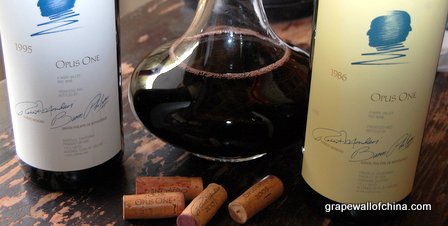
4 You spent over a decade working with Opus One in Asia, including at the height of China’s red wine boom. What did that boom time look like as an insider?
I spent quite a bit of time with Opus One, that’s true, and the inside view is amazing.
It is exciting to see people spend good money for a bottle of iconic wine. Of course, the money is equivalent to the quality. I do not say that because I worked for Opus One, but because I think there is a price to pay for everything you drink.
Knowing Opus One is a top-level high-quality California wine, people were trusting not just the brand, but also the skills of the people making the wine and the taste behind it. So, from the inside, I actually felt the entire market was on the rise and people were using the ability to spend to experience something that is different.
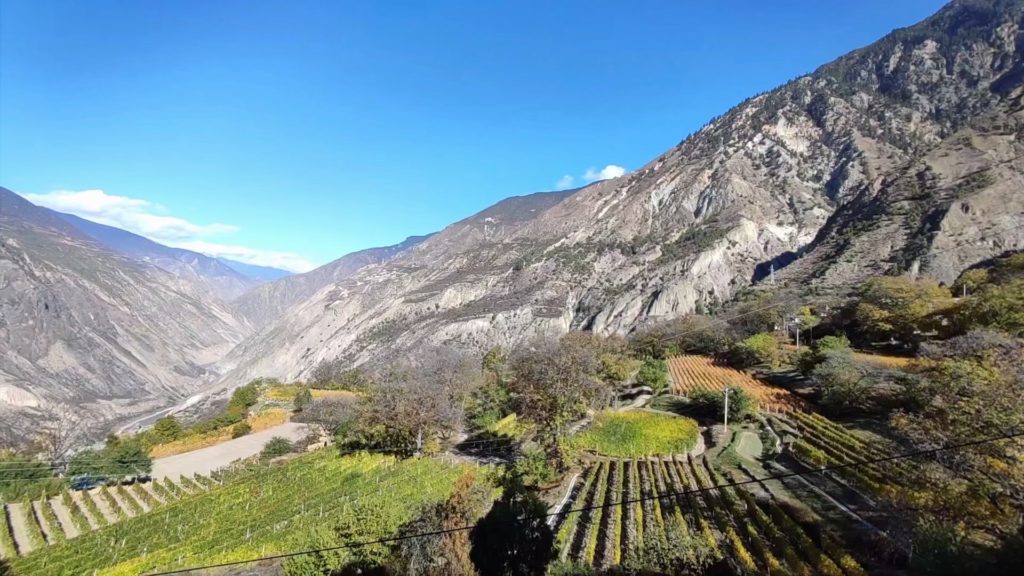
5 You recently worked for LVMH’s Ao Yun winery in the high-altitude Shangri-la region in Yunnan. How do those wines stack up against top reds? And what makes Yunnan’s terroir special?
I spent a whole year with Ao Yun. And I must say it totally changed my point of view after 27 years in the food and beverage industry. I have never seen or experienced something like that.
I had the opportunity to visit Yunnan and it gave me a new appreciation. It’s not just about wines from China. We’re talking about high altitude, we’re talking about working with a culture that never had the opportunity for a better understanding or an education about viticultural standards.
High altitude is one thing, but being able to get the grapes to ripen is another thing and working with the people and having them understand every single movement through four seasons is yet another. This is something new for farmers there, so I totally have a different appreciation, because I now also know how difficult it is to work up there.
Also, everything at a high altitude is totally different. Is the terroir special? Yes, the amount of sunlight is different, the amount of rain is different. Yunnan terroir is one of a kind. I don’t think there will be anywhere in the world that will be the same as what we get in Yunnan.
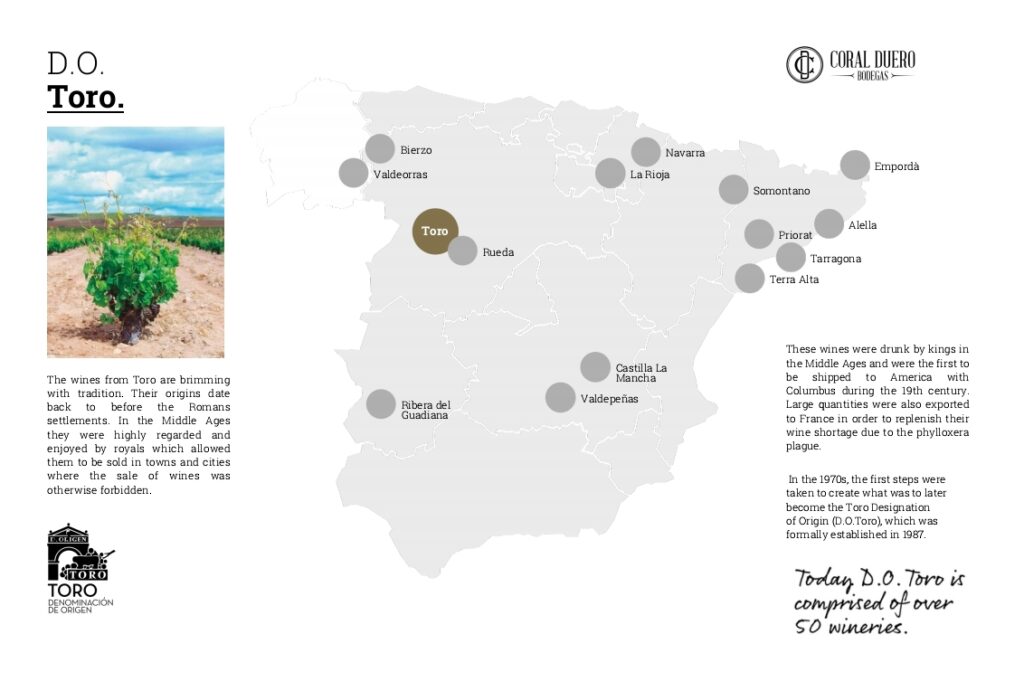
6 Your newest venture is as partner in Spanish winery Bodegas Coral Duero. Where is the winery, what makes it special and what are your upcoming plans?
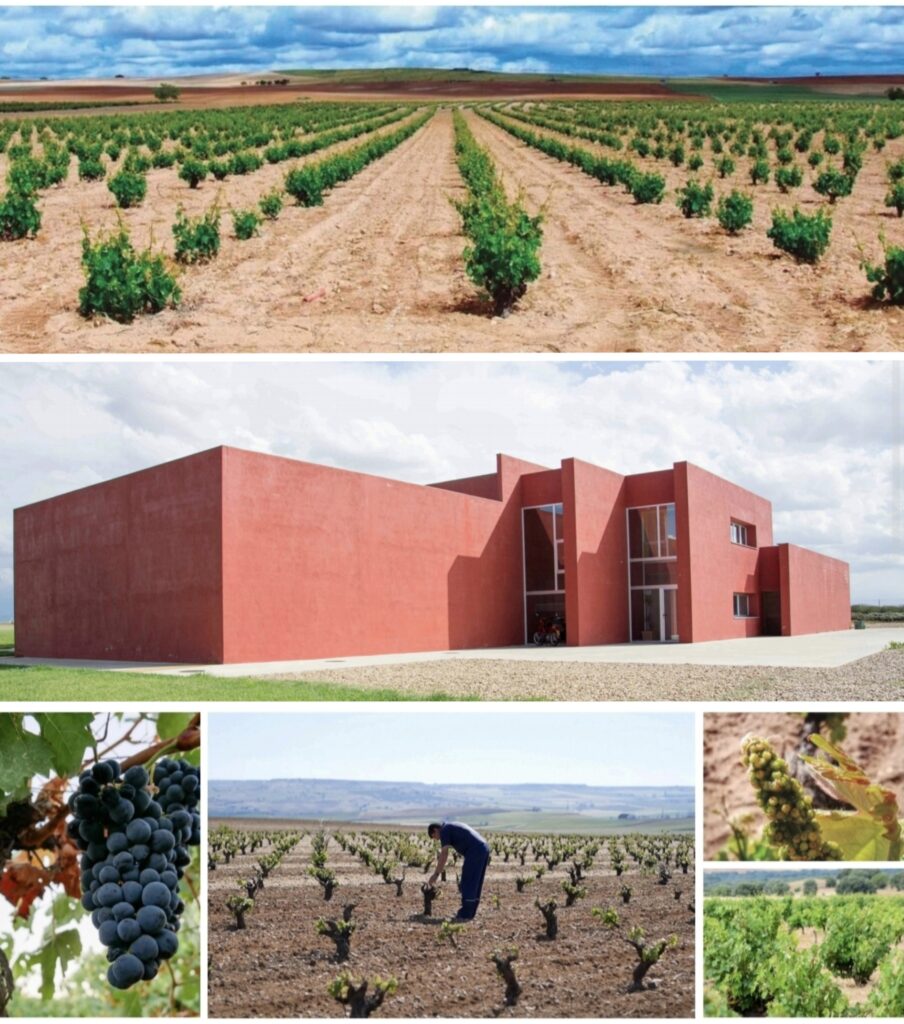
The winery is located in Toro, a two-and-a-half-hour drive northwest of Madrid. I was attracted by the old vines.
The name “Coral” is because the previous owner was in shipping. And “Duero” is the spelling of a river in Toro.
The old vines there are amazing because in Europe there are really not a lot of places with old vines. And I love the fact that we respect these vines and the amount of time that they have lived — longer than any human — while producing this beautiful grape variety called Tinta de Toro, which is actually in the same family as Tempranillo.
Our oldest piece of land has vines that are 140 years old. These vines were planted in 1880 and actually survived phylloxera. So, I am absolutely excited to be able to show you the wines of a 140-year-old vine the next time we see each other.
The next step will be selling our wines all around the world. Our wines are already distributed in Japan, in Vietnam, in Korea, and I will be bringing more of them to China, where they are already available.
I will be making sure to share the story of these great vines in China as well as wines from four plots of land — vines from 40 years old to 90 years old to 100 years old to 140 years old. This is really exciting for me, and I can’t wait to show all of the wine lovers what we are making in Toro.
7 Spanish wine arguably offers the best value in China. Yet Spain’s wine volume, and especially wine value, is very low versus other nations. Why isn’t Spanish wine doing better here?
Spanish wines have always been sold in China. I remember in 2007, in 2008, plenty of Rioja wines, then eventually Ribera del Duero. I also saw quite a bit of Spanish wine that was very good value for money in the market.
I think maybe a lack of education led Spanish wines to be being less well-known and people switched to maybe Australian wines as we saw in recent years because it was all in English and there was a lot of education.
Spanish wine should be and will do better.
When I was in Shenzhen attending Wine to Asia, there were multiple master classes about Spanish wines. I attended one by a Spanish Master of Wine. He was talking about how great Spanish wines were and I do agree with him.
It is not just old vines. The terroir is amazing and the grape varietals from there are actually very palatable to Chinese tastes.
So, I think in the coming months, with the fact I will be visiting China a lot more, I hope to be able to share more Spanish wines and wines from Toro with people in China. And hopefully it will sell better.

8 Finally, we’ve had a few malatang sessions in Beijing, sitting on plastic chairs and casually enjoying that spicy treat. For those who want to pair wine with this fiery street food, what are you top three picks?
I love the times when we shared malatang on the streets of Beijing and I look forward to the day that again.
I love spicy food and I love this question, too, because I think there is no definite answer. I think everybody should just try what they feel is the best, and if it doesn’t work, then move to the next wine.
But there are definitely some classics to follow.
As a retired sommelier — I call myself that now because I’m no longer in a restaurant — I think off-dry white wines are really good. I think Rieslings and Gewurztraminers — I love the terroir and minerality; I love the fact that if I’m eating something hot in terms of temperature and spiciness, we can go with a Riesling, a Gewurzt, a Moscato, anything fresh and a little off-dry and really balance with the spiciness in the food.
For those who like red wines, I think that a lighter-bodied red wine will go really well with spice, too. But the important point is everybody is drinking red wine way too hot.
Room temperature now wasn’t room temperature hundreds of years ago, and I think everybody should chill the red wine a little bit. Coming up from the cellar, a bottle of wine is okay. But buying it from a shelf in the retail shop, this is just way too hot.
So, for people who struggle with tannins or don’t like wine that is over-alcoholic, they should chill it a bit and make it much more approachable, and try a lighter red like a Pinot Noir that would go really well with its high acidity.
Actually, the last time I had malatang, I had Robert Mondavi Fume Blanc, which is an oak-aged Sauvignon Blanc. That was delicious, too.
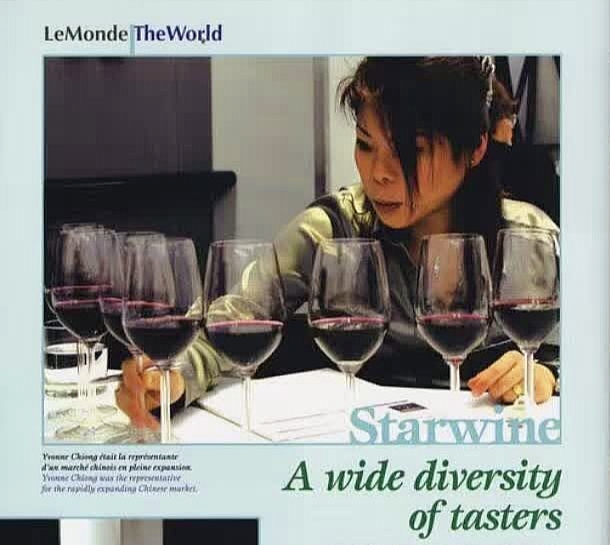
Also see these 2008 posts Yvonne Chiong wrote about her early days in Shanghai. “New to Town: Getting Started as a Shanghai Sommelier” Part 1 and Part 2.)
And check out lots more Q&8s here.
(Get the free Grape Wall newsletter here. Follow on LinkedIn, Instagram, Facebook and Twitter. Grape Wall has no sponsors: help support the mission, including World Marselan Day via PayPal, WeChat or Alipay. Contact Grape Wall at grapewallofchina (at) gmail.com.)
Leave a Reply
You must be logged in to post a comment.