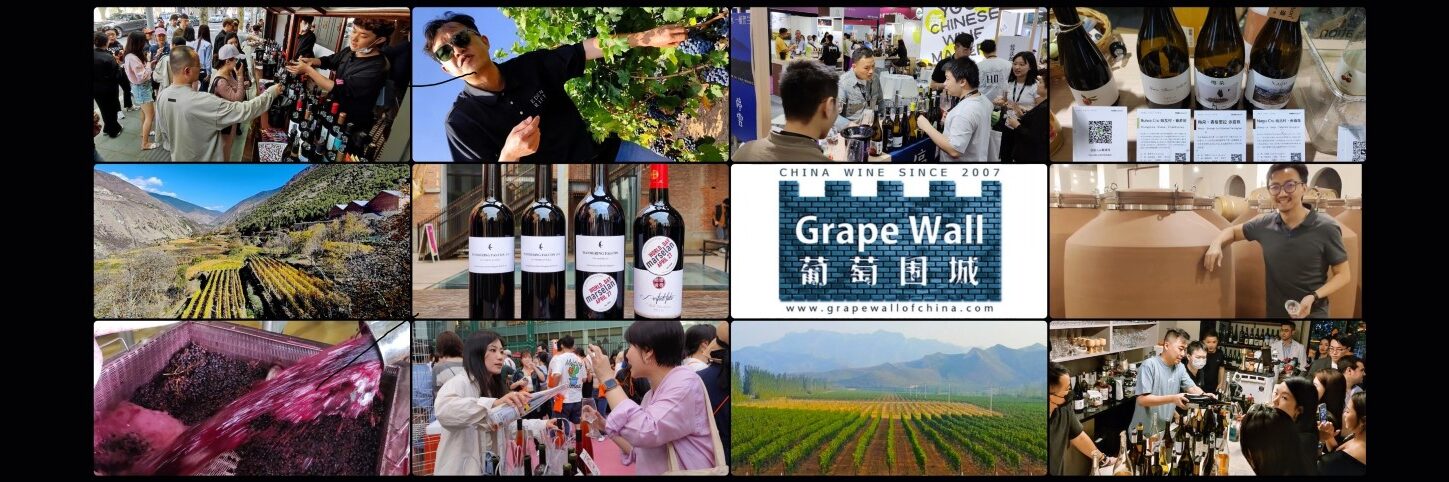

As part of a recent Wine Searcher story on the rise of Marselan in China, I talked to Ma Huiqin, a wine marketing expert and professor at China Agricultural University in Beijing.
Our exchange was lengthy, and I could use but a few quotes, so I’m turning our talk into a Q&8, covering why Ma thinks Marselan is a good fit for China, her two key criteria for establishing a flagship / signature grape and how students in her wine appreciation class—10,000 graduates and counting—react.
(Photos include two World Marselan Day sessions held during Ma’s class. Credits to Teng Yu, Liu Pengyu and Tang Xiao.)

On Marselan’s China advantages
Ma Huiqin: For normal consumers in China, wine largely means red wine.
Of the red wine grapes, Cabernet Sauvignon* is a late-ripening variety with very strong tannins and is not easy to understand. It’s not a good introduction to the wine world. Also, there are so many great Cabernet Sauvignons from different production regions.
For China, a grape is needed that is red, relatively easy to be understood, good for blending and for varietal wine, and with the ability to be diversified. From this point of view, Marselan is a very good candidate, and it has proven that it can take this role.
[*Cabernet Sauvignon is by far the most-planted red wine grape in China.]

On Viticultural Flexibility
One reason Cabernet Sauvignon is popular in China is that it is relatively easy to grow. Sauvignon is [often linked to the French word] for “savage”, meaning wild. It is strong, relatively vigorous, resistant to disease and performs relatively consistently across different regions.
Marselan is a child of Cabernet Sauvignon, also relatively easy to grow and performs quite well across regions.
In China, it is resistant to the harsh growing conditions in northwest China [including extreme heat] and in coastal Shandong province, where there is more summer and harvest rain, and it is hard to get deep color. Marselan gets deep color even in Shandong, so it fits the need of the growers.
On Its Unique Position
A signature grape should not overlap with other regions or other countries. Bordeaux, Burgundy, Australia, Argentina and Chile all have their own [signature] grapes, but Marselan has not been claimed.
So, Marselan performs well, matches the needs of growers and has not been claimed by another country.
These advantages are unique and support Marselan as a signature grape. It perfectly fits for China.

On Greatness in Signature Grapes
I would say to make Marselan more popular, there are two very important factors.
First, for a signature grape, you need to make a great wine. It should have very high complexity and a unique character, which can be promoted for the high-end and traditional consumers. You need to make it at a very high level, like a great Cabernet Sauvignon or a top old vines Shiraz or a leading Pinot Noir.
This is the road other signature varieties have taken. You to have a very high quality and a high price—a shining star in the wine industry.

On the Need for Volume
Second is volume. You still need to make wine that is acceptable to a large volume of consumers. They represent the real revenue.
Not everyone can make the highest quality and most expensive wines. Those show the possibility at the top. You also need a have a very sound consumer base to support the growing acreage of Marselan and production of the wines.
I would say the acreage should be increased and the style of Marselan wines diversified in order to get more recognition from consumers.

On how her students respond
They are relatively young and new to wine drinking and appreciation. My students don’t have any idea of the so-called noble varieties. For them, Cabernet Sauvignon, Pinot Noir and Marselan are all at the same starting point.
Marselan can be made as a big red, a white wine, a sparkling wine like Shiraz or part of a blend. If they like or dislike a particular Marselan, it is not because of Marselan itself, but the style of that wine.
In fact, every year, we make and sell a wine for the university. Fifty percent of the blend is Marselan and students like it.
[Check out the Wine Searcher article here. And read more Q&8s here.]
(Get the free Grape Wall newsletter here. Follow on LinkedIn, Instagram, Facebook and Twitter. Grape Wall has no sponsors: help support the mission, including World Marselan Day via PayPal, WeChat or Alipay. Contact Grape Wall at grapewallofchina (at) gmail.com.)
Leave a Reply
You must be logged in to post a comment.