
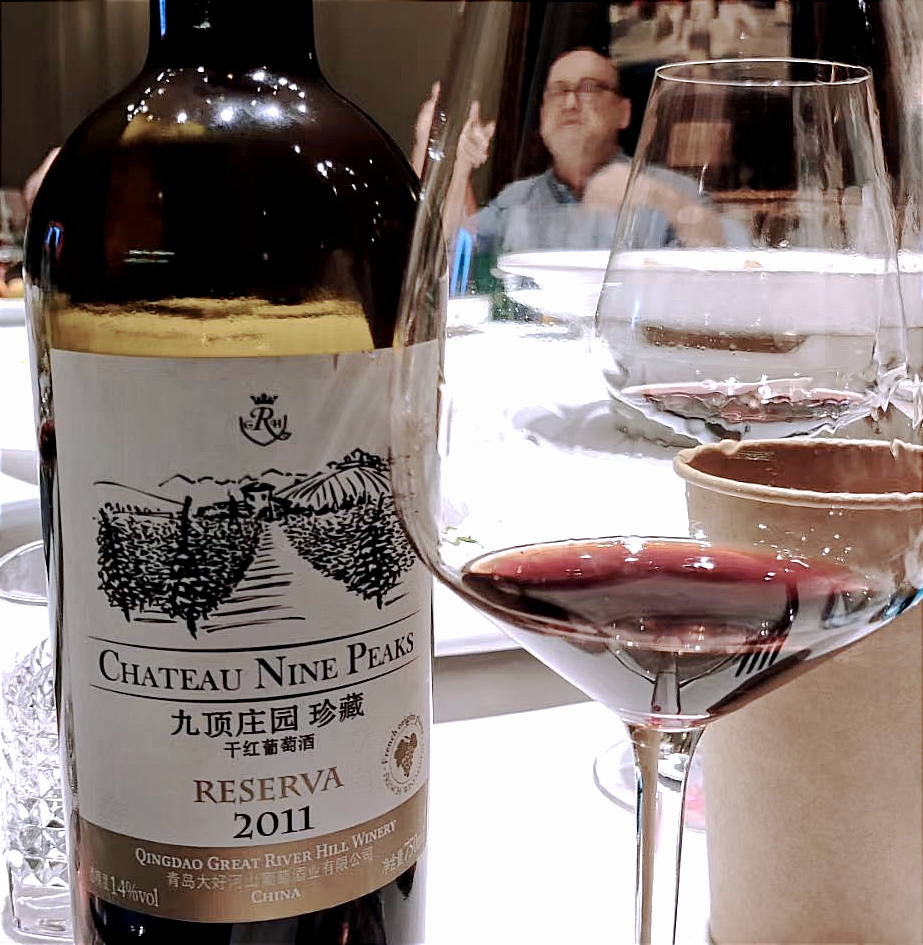
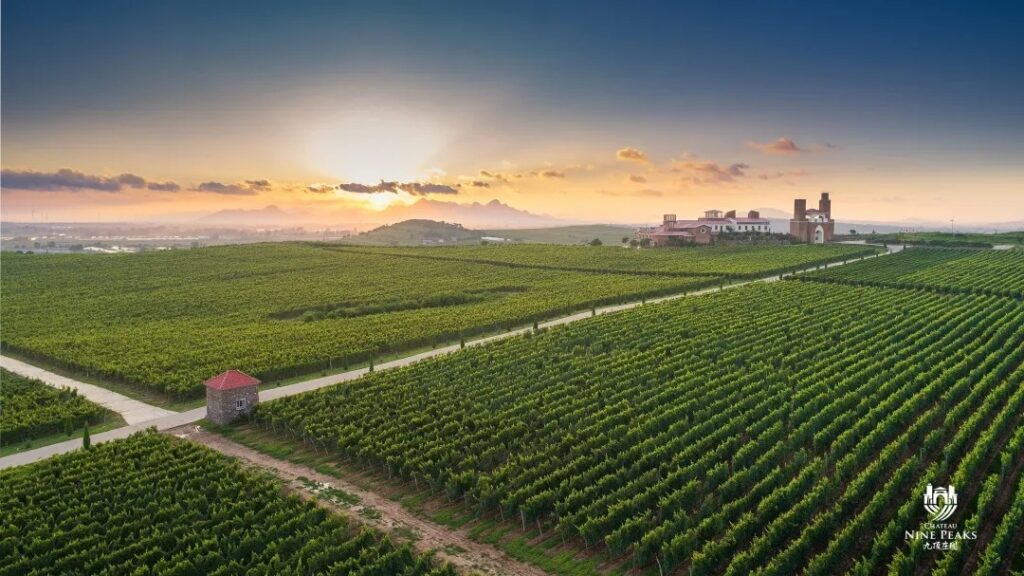
After establishing wineries in Bulgaria and Romania, financier Karl Hauptmann expanded to China in 2008 by founding Chateau Nine Peaks in Laixi, a city just off the eastern coast in Shandong province.
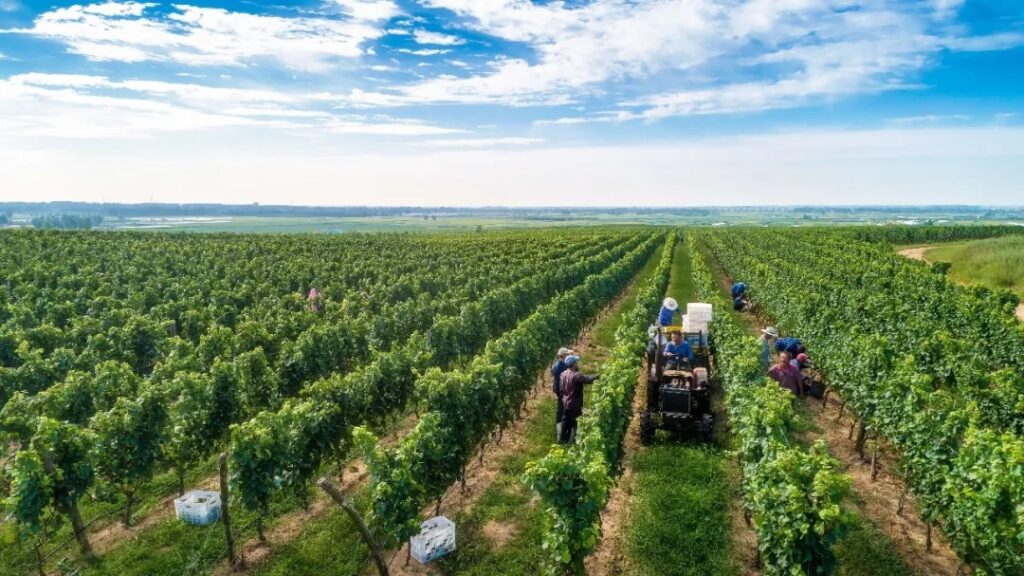
Set near the foot of Nine Peaks Mountain, the project covers 160 hectares, including 90 hectares of vines. The first vines were planted in 2009, with Nine Peaks importing rootstock and establishing a nursery that covers three hectares. Wine inspiration comes from French planting and vinification methods.
I wrote about Nine Peaks in its early days—see “The Donkey and the Grapes”—and the wines have since made their way to some ten other markets, including France, Germany, Malaysia and Japan.
In this Q&8, I asked Hauptmann, who has had a long career in international finance, including as founder of Telor Capital Management, about his choice of Laixi as a site, about which grape varieties are exceling, about connecting with consumers, and about how China’s market has become more open to wine since his first visit some 30 years ago.
1 Laixi is isolated between Qingdao, which gained some fame in the 1980s with Huadong winery, and Yantai, with a winery cluster that includes mega producer Changyu, DBR Lafite’s Longdai and boutique operators like Mystic Island, Jiangyu and Longting. What made you decide to locate Nine Peaks there?
The question about Laixi is very interesting. When I checked around the Shandong area, I quite liked it all, but Laixi was especially interesting because of one hill which is exactly like Burgundy. And that’s not the case anywhere else. Laixi is further away from the coast and that is better because you have less moisture in the morning and a constant breeze. Because we are higher, the humidity gets blown away
In addition, the local government was extremely forthcoming, and still is extremely forthcoming, and that obviously makes a big difference to any investor, particularly for long-term agricultural project, where you the cash flow is backloaded and comes after many years.
2 Taking a wider view, China is a huge country with distinct wine regions. What advantages do Laixi and the Shandong Peninsula have versus these other regions?
Shandong Peninsula has a tremendous history of making wine, excellent terroir and professional farmers who are very knowledgeable about specific work in the vineyards, which is obviously of great help.
Only the rain patterns have changed, and are less favorable, but the market around us shows excellent wine demand from local customers and that is different from other areas.
3 You have established wineries elsewhere, including Bessa Valley in Bulgaria and Alira in Romania. What unique challenges did China present?
The key problems were the reliability of historical weather data, the availability of the right ingredients for vineyard treatments, and the quality of seedlings. This is why we established our own nursery!
4 I remember my first Nine Peaks visit in 2013. What stood out was the focus on vineyards. What needed to be done?
The key was thorough land preparation, with ecological soil treatments before planting. For the planting, we focused very much on getting the right rootstock for the chosen clones of each variety.
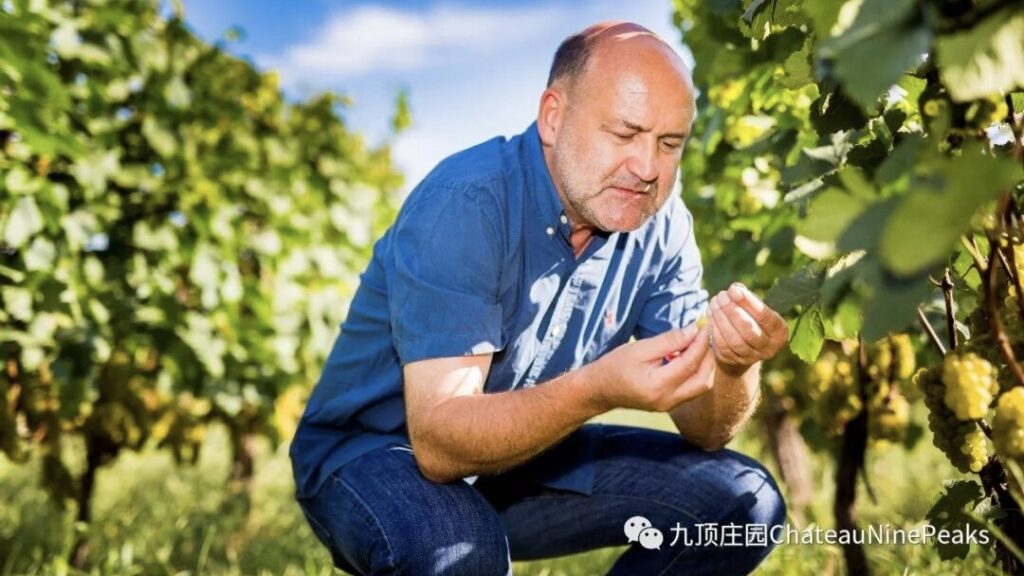
5 There is lots of experimentation with grape varieties in China. Based on your expectations, what varieties surprised and which have disappointed at Nine Peaks?
We have been surprised by changes in the historical weather patterns, which do not allow us to make a great Syrah and Merlot every vintage.
The very positive discoveries have been “spicier” varieties, such as Petit Verdot, Marselan and Alibernet.
For Cabernet Franc and Cabernet Gernischt, we are very proud to continue to deliver the highest quality as expected.
6 You first visited China more than 30 years ago—Shenzhen in 1994. How does the transformation of China and its economy since then tie to your aspirations for Nine Peaks?
Without the huge and positive economic changes between 1994 and 2008, delivering much-improved infrastructure, our investment would have not been possible. Obviously, the infrastructure continues to get better and better as does the wealth of the people we define as our customers.

7 I feel the biggest challenge for Chinese wineries is connecting with consumers. They excel at trade fairs, contest medals and hosting critics, but convincing consumers to buy remains difficult. What is your position?
You must keep in mind the great food culture China enjoys. This is why the approach has to be a very personal one focused on individual tastings and “product description” for every customer, either by our re-sellers or our team at Nine Peaks, often here at our chateau.
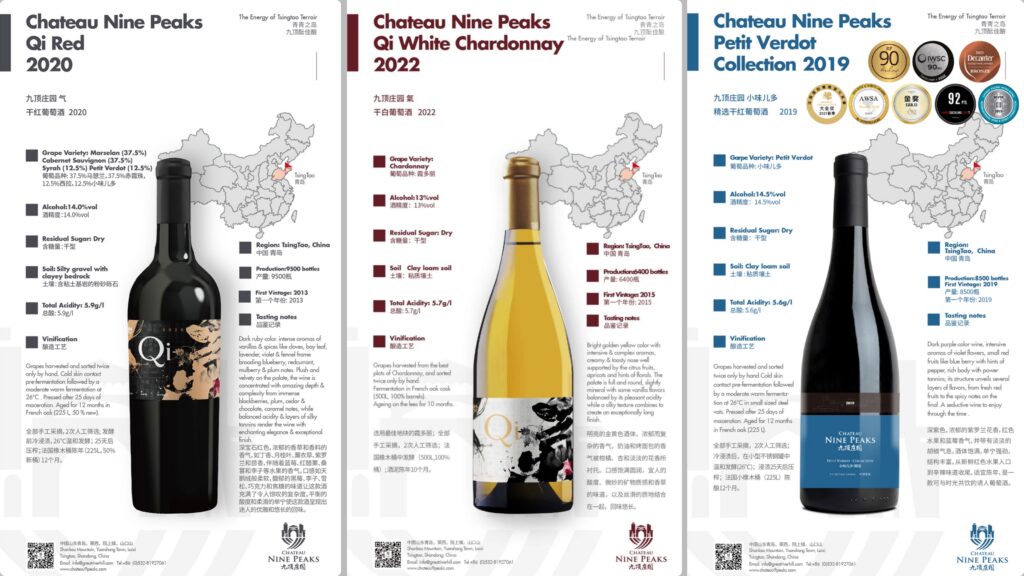
8 Wine has a long history in China but few people drink it regularly for pleasure. If a curious newcomer visited Nine Peaks, what three bottles would you recommend to get them started?
Our Chardonnay “QI” and Red “QI” wines have the highest ratings but are also the most expensive, along with the Chairman Reserve.
To get started, I would recommend our “Moonlight”, a very complex and elegant Blanc de Noir, a white wine made from three red grape varieties, including Cabernet Franc.
Second, I would share our pride in the China variety of Cabernet Gernischt: we believe we make the best single-variety Cabernet Gernischt, exceling in fruit, structure and balance while showing the brilliant and “spicy” aroma defining this great variety.
And third, I would like to share my love for Petit Verdot, which I like to call the “Chairman’s Darling”, as it is very difficult to produce a single-variety Petit Verdot that has freshness, aroma and great length while not losing the brilliant fruit profile through over-extraction, as most wineries do.
Learn more about Nine Peaks here. And check out more Q&8s here.
(Get the free Grape Wall newsletter here. Follow on LinkedIn, Instagram, Facebook and Twitter. Grape Wall has no sponsors: help support the mission, including World Marselan Day via PayPal, WeChat or Alipay. Contact Grape Wall at grapewallofchina (at) gmail.com.)
Leave a Reply
You must be logged in to post a comment.