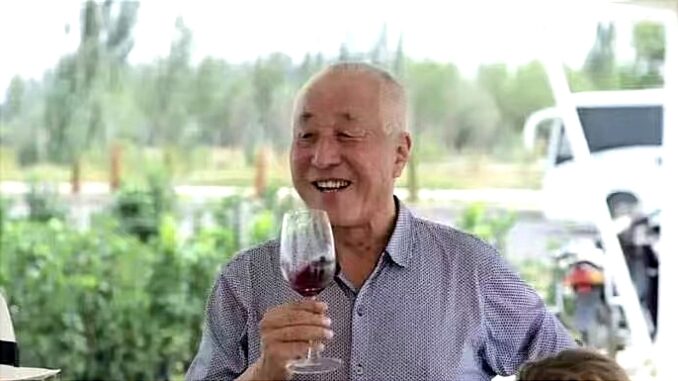
“I firmly believed the eastern foothills of the Helan Mountains would become a renowned wine region. Without that belief, how could I have endured so much hardship in this barren land—exposed to wind, sun and rain?”—Wang Fengyu
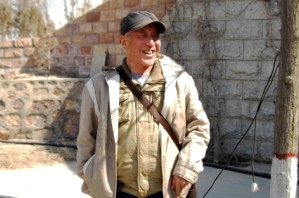
Wang Fengyu is a key figure in Ningxia’s rise as a wine region: from his involvement in planting vines at now-Legacy Peak winery in the 1990s, to co-founding winery Helan Qingxue at the turn of the century, which helped put Ningxia on the global wine map, to helping his daughter Wang Fang establish Kanaan.
In this Q&8, I ask Wang aka “Old Wang” about his early wine days, about Helan Qingxue’s Decanter wine award win in 2011, about Ningxia’s terroir, including the need to bury wines each winter, about the status of Riesling in Ningxia, and about how the region compares to others in China.
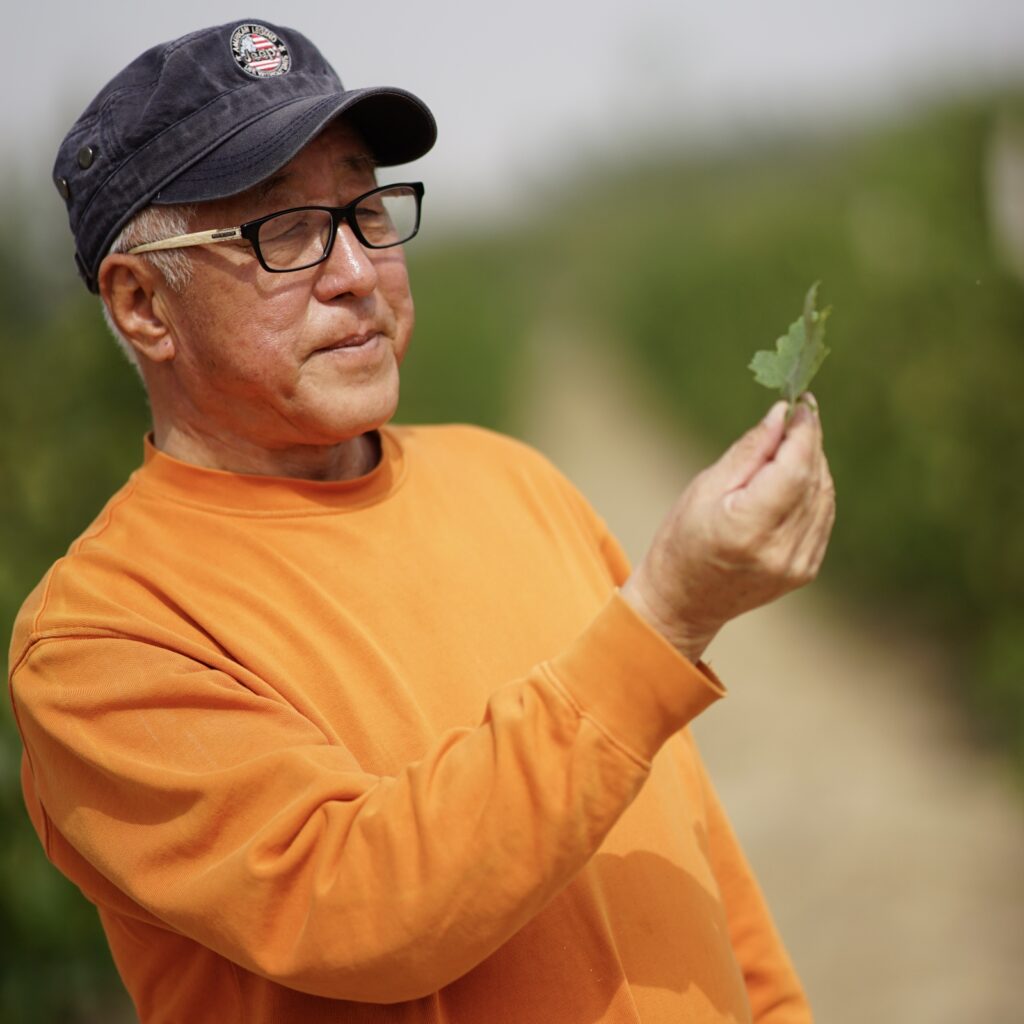
Grape Wall The story is that in the mid-1990s, you convinced Liu Zhongmin, at what is now Legacy Peak, to plant grape vines instead of fruit trees. And some of Ningxia’s earliest fine wines, including by Helan Qingxue and Silver Heights, used grapes from those vineyards. Could you tell us more about that story?
Wang Fengyu: When [wine consultant] Li Hua spoke about surveying the vineyard site, he said that he felt hesitant about the terrain around the Western Xia Imperial Tombs because of the landscape.
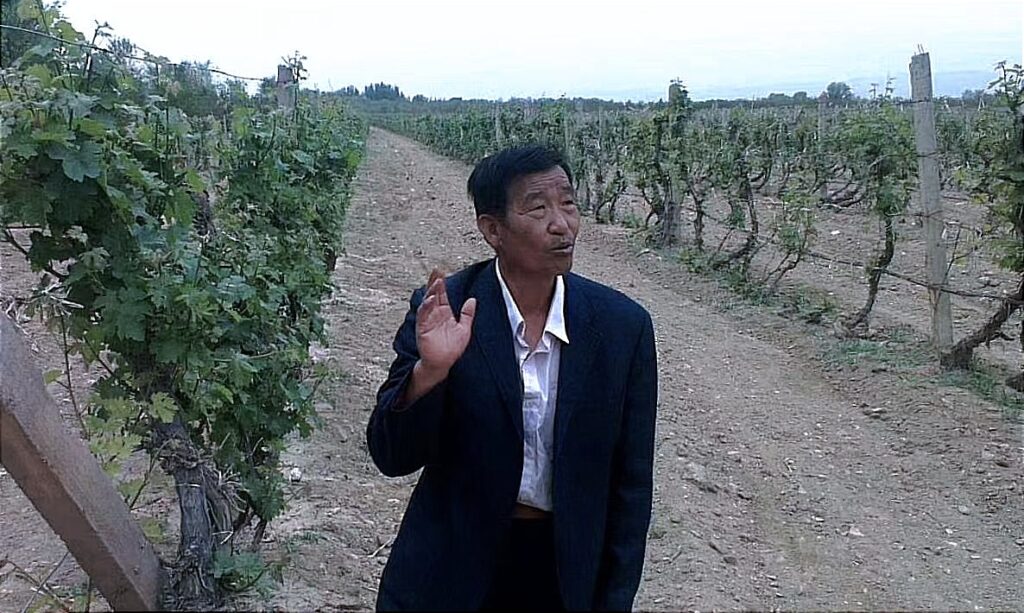
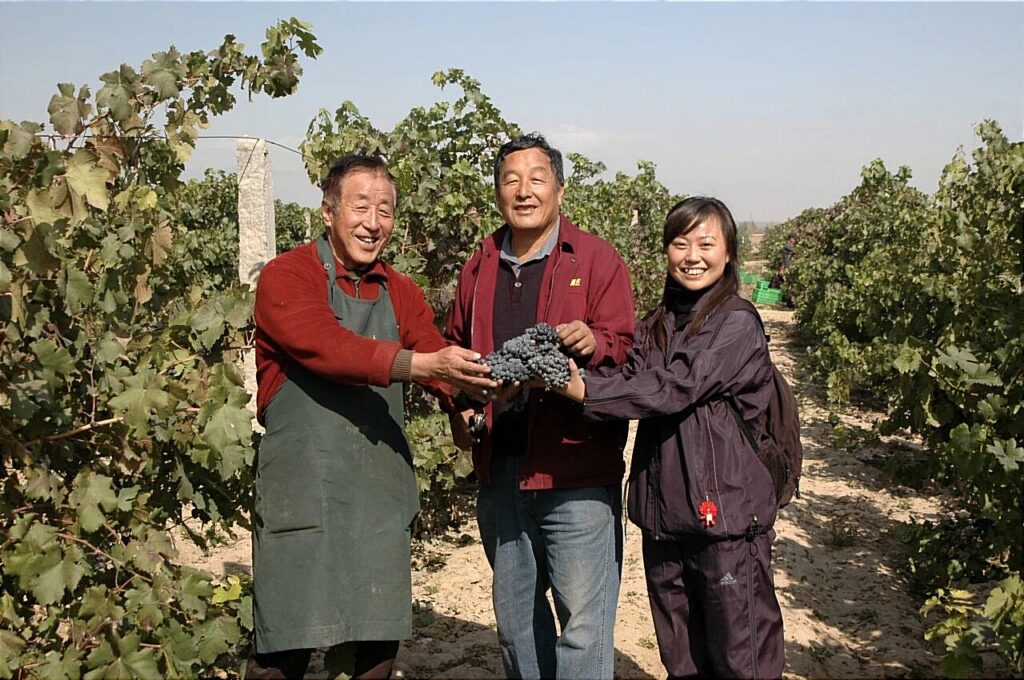
At that time, I was managing grape nurseries. I asked Xiao Liang, who was in charge of the seedlings, to prepare 20,000 vines for me, and I had Liu Zhongmin [at what is now Legacy Peak] plant them, covering 150 mu [10 hectares] in total. (See Liu’s photo below.)
I also contacted Yin Guangxia [an early grape grower and wine producer in Ningxia] to purchase 10,000 Merlot vines, bought Red Globe grapes, which we eventually did not continue planting, and continued planting Cabernet Sauvignon.
I invited a French expert to inspect the vines on site. What he said aligned closely with Li Hua’s views.
In 2005, the year Helan Qingxue was established, we had already used grapes from the Western Xia site to produce wine.
Experiments conducted by [grape expert] Li Yuding showed that this parcel experiences both spring and autumn frosts about ten days later than surrounding areas. Even when digging two meters deep, there were still feeder roots present.
Zhang Junxiang also managed 15 mu [1.5 hectares] here, worked by his father, and in the end, the land was entrusted to Liu Zhongmin for planting.
This parcel gave rise to Helan Qingxue’saward-winning Jiabeilan wine. Silver Heights also competed for this vineyard, further increasing the value. When Kanaan Winery was first established, it, too, used grapes from Liu Zhongmin’s vineyard, and the first wine was made here.
2 You are a co-founder of Helan Qingxue, known for winning an International Trophy at the Decanter awards in 2011. How did you react to that victory? Were you surprised?
At that time, everyone at our winery was extremely excited. [Co-founder] Rong Jian and his wife, [winemaker] Zhang Jing and [consultant] Li Demei all went to London to receive the award.
Our country’s leading experts had long predicted that this area would produce the best grapes and make China’s finest wine, so I always believed that. Deep down, I felt that my earlier vision had been realized.
Many people didn’t believe such statements, but I felt that as long as we listened to these scientists, we couldn’t go wrong. I thought it was only natural to win the award, and it didn’t come as a surprise to me.
3 Ningxia’s wine region is actually quite large, stretching more than 100 km from north to south. How does the terroir of Helan Qingxue differ from other parts of Ningxia?
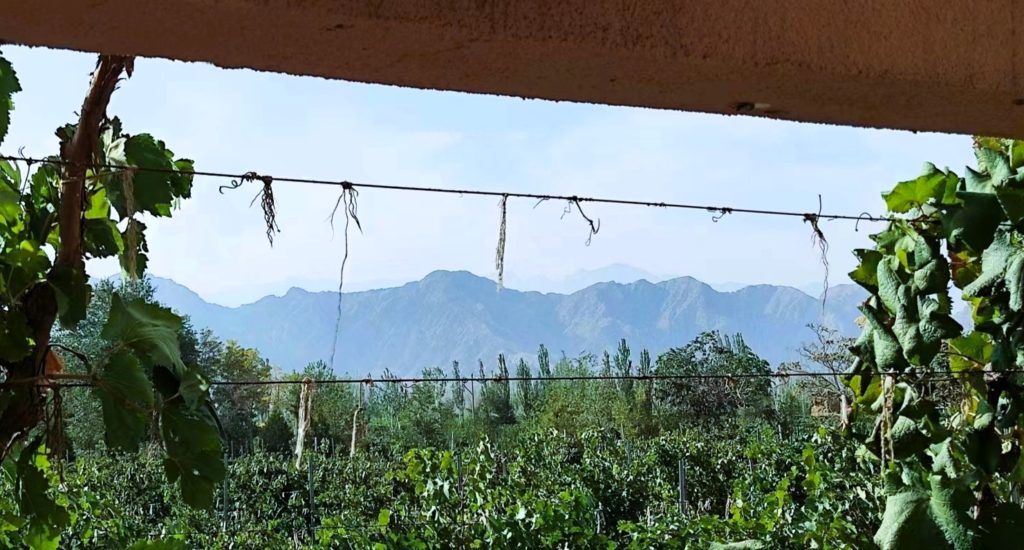
Technical experts in Ningxia, including myself, have long been discussing where the core production area truly lies and where the best terroir can be found. Within Helan Mountain’s eastern foothills appellation, the terroir of different sub-appellations varies, each with its own characteristics. We need to explore these together through practice—soil, climate and human intervention all play a role.
Understanding the unique features of each sub-appellation and the cultivation methods best suited to each winery is essential. I believe it will take at least thirty to fifty years of dedicated exploration, observation and practice to fully understand the potential of a sub-appellation.
The soil and climate of Kanaan’s vineyard, for example, are similar to other areas, but there is less gravel. The soil here, shaped by thousands of years of rainfall washing down from the mountains, is rich in minerals, and has good permeability and strong cohesion. It belongs to the alluvial fan soil category.

4 Your daughter Wang Fang lived in Germany and brought a love of Riesling back to Ningxia, a grape that is not common in the region. What do you think of Riesling’s potential in Ningxia?
When Kanaan was being established, Wang Fang proposed planting Riesling. I wasn’t optimistic about it at first, but since it is a signature German variety, I could understand her reasoning.
Initially, 30 mu [2 hectares] of Riesling were planted. There was much debate over whether these were truly Riesling grapes, but after consulting extensive materials, I confirmed they were.
I wasn’t entirely sure how well this grape would perform, but after tasting these Riesling wines, I found them no less impressive than Chardonnay—their aroma and flavor were outstanding.
Through Wang Fang’s winemaking, it has been proven that Riesling can be considered one of the main varieties in the eastern foothills of the Helan Mountain region. However, as climate patterns shift and temperatures in Ningxia gradually rise, this poses a challenge for Riesling, which originates from cooler climates in Germany. Therefore, continued practice and observation of this variety will be necessary.
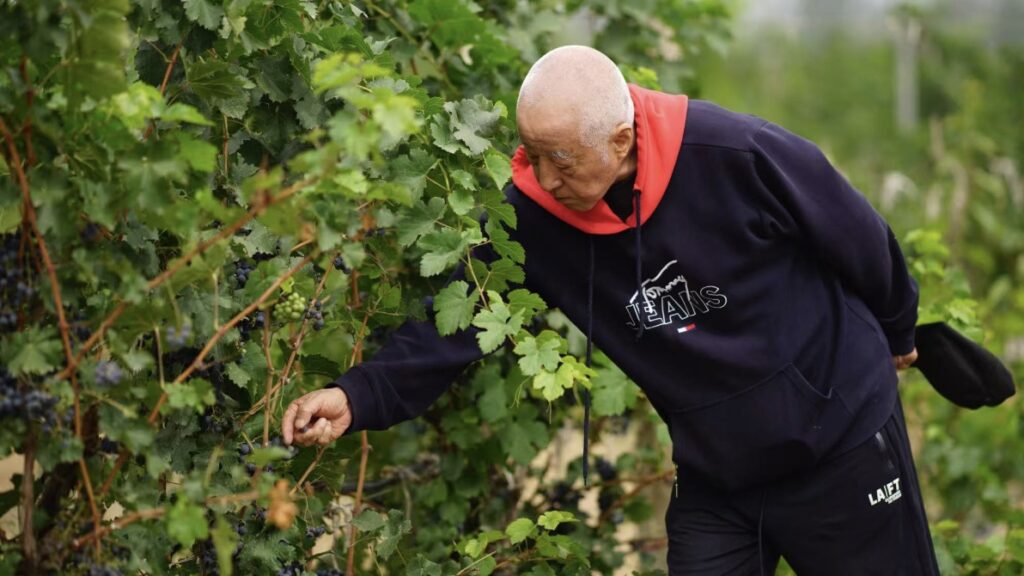
5 Ningxia wineries bury their vines to protect them during the winter, then uncover them each spring, at much cost. How does the burial affect vine health? Do you see alternatives to burying vines on the horizon?
For wine grapes along the “38th parallel” in China, burying vines for winter protection is essential. For now, I don’t believe any alternative to this method is viable. I have experimented with other approaches and introduced different varieties, but they were not suited to Ningxia’s terroir.
Based on current cultivation practices, I believe burying vines is necessary, and they cannot be covered too shallowly—at least 80 cm at the base and 30 cm on top. Even though this method is costly, failing to do so will certainly result in vines freezing to death. One year, temperatures dropped to -24°C, and many wine grapes in various regions perished—a painful lesson.
Whether future breeding efforts will produce varieties that do not require burial is something that will depend on advances in science and technology.

6 Regions such as Shangri-la, Yili, Huailai and Yantai are achieving quality gains and making the China wine industry more competitive. What makes Ningxia unique and what does it need to do to keep succeeding?
When China’s top scientists were conducting research in Ningxia, they told me—back when I was still a young man—that China’s wine future lay in the west, as other wine regions each had their own drawbacks.
Ningxia, however, had a well-balanced combination of favorable conditions. In particular, the soil at the foot of the Helan Mountains was ideal for growing wine grapes, with the Yellow River providing supplementary irrigation alongside annual rainfall of just 200 mm.
Looking further into Ningxia’s history, one finds that wine was produced here in ancient times.
I have always trusted these scientists and throughout my studies I have worked to spread awareness and encourage people to take Ningxia’s wine industry seriously. Despite all the doubts along the way, I have held firmly to my belief that Ningxia is the best wine region.
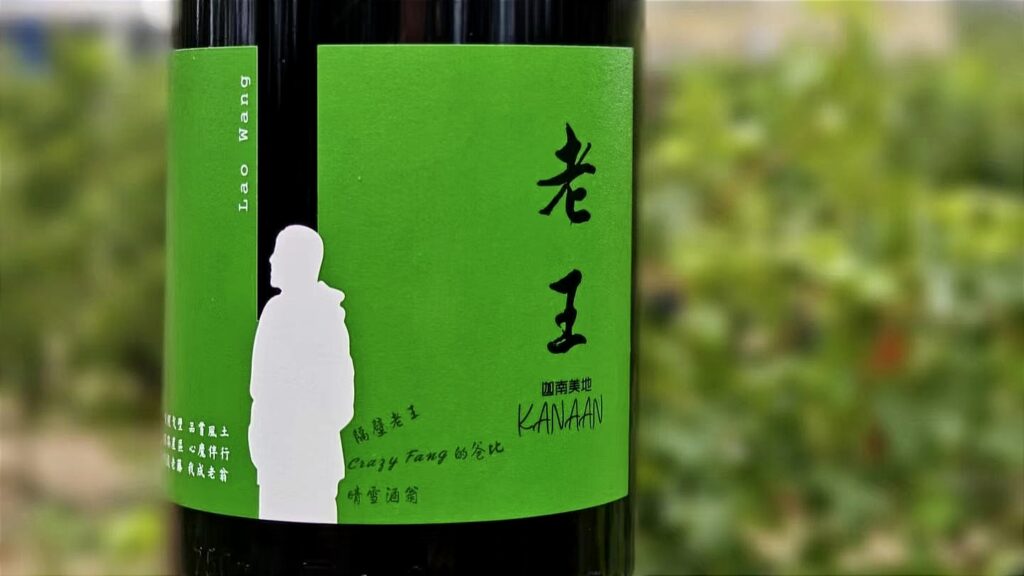
7 For your eightieth birthday, you were honored with a Kanaan wine called Lao Wang (Old Wang), a Shiraz from the 2021 vintage. How did you like the wine? What foods do you think taste best with it?
I am very pleased with this birthday gift from my daughter.
So, how good is Syrah? The discussion around it is growing louder. I haven’t planted it myself, nor have I made wine from it, so this is something that will have to be proven through experimentation.
I don’t have much expertise in food and wine pairing, either, and I’m not much of a drinker myself. As I get older, my sense of taste and smell have changed, so I’ll leave the judgment to others.
8 When you got involved in wine more than 20 years ago, did you imagine Ningxia would have this many wineries and make this much good wine by 2025? What are the biggest surprises for you?
Those leading experts told me that Ningxia is the best wine region, and I have held onto that conviction. When Jiabeilan won its award, there was a painting with an inscription: “Lovely without seeking Spring’s acclaim, only heralding Spring’s gentle reign. When the mountain flowers are in full bloom, amidst them she will smile.”
At that time, I firmly believed the eastern foothills of the Helan Mountains would become a renowned wine region. Without that belief, how could I have endured so much hardship in this barren land—exposed to wind, sun and rain?
I have never doubted my conviction for a single day, nor have I ever regretted it. I am not at all surprised—through hard work and perseverance, this wine region will only get better. Our technical teams, workers and winery owners have collectively turned the experts’ predictions into reality.
This is the result of our joint efforts. We must also thank the Party and government leaders of the region, who have never wavered in their support for the development of Ningxia’s wine industry.
We have faith, we believe, and because of that, we have succeeded. We see this as a gift of high-quality natural resources bestowed upon Ningxia by providence—an achievement made possible through the combined efforts of all. As long as humanity exists, people will need both material and spiritual culture. Wine is a spiritual supplement, and as long as people exist, wine will never disappear.
(Get the free Grape Wall newsletter here. Follow on LinkedIn, Instagram, Facebook and Twitter. Grape Wall has no sponsors: help support the mission, including World Marselan Day via PayPal, WeChat or Alipay. Contact Grape Wall at grapewallofchina (at) gmail.com.)
Leave a Reply
You must be logged in to post a comment.