
Li Jing aka Melvin Li left behind the world of finance to found the Ningxia winery Haiyue Renhe with spouse Li Jie in 2016. Set close to the Helan Mountain range, the winery is best known for its brand Mountain Wave and for being the rare operation not only growing Pinot Noir, Marselan and Malbec but also blending them.
In this Q&8, I ask Li about this quirky grape trio, the top operational challenges at Mountain Wave, his experiments with pet-nats, and more. Check it out below. And check out more Q&8s here.

1 How did you first get involved in the Ningxia wine industry?
I was born in Ningxia and one reason for returning from Shanghai was to stay with my family. I have two kids with my wife, and with our four parents, that is eight family members here in Ningxia.
A second reason is I was going to carry on in banking and finance, but I felt if I continued to do that, I couldn’t see what would happen to me in the next 10 or 20 years doing the same thing, and it kind of frightened me.
So, we started to look for other options. Our friends showed me around and we tasted some quality Ningxia wines, which really shocked me because I had really bad memories from when we got married and the wines had a strong sense of sulphur and gave me a headache.
Those tastings provided an entirely different picture for us. I thought maybe it would be good to do something with wine. Now here we are.
My wife studied architecture in Germany, so she could also put what she learned into the winery and fully design our chateau.
And I studied finance and accounting in England. I’m quite a detailed person. Making good wine comes from 10,000 different details, so this is to my advantage, and I enjoy the process.

2 What are the biggest operational challenges and which tasks are most rewarding?
I feel so relaxed and happy to be in the fields, to drive my tractors and wander around with specific tasks to do.
The most stressful thing is there is a lot of room for improvement but a limited amount of time. The vines grow very fast during the spring and summer, and we have more than 50,000, so if we want to create the same or similar standard for all of them, such as through pruning or removing leaves, we have to perform those tasks in a week or ten days.
Controlling for all these vines is really quite challenging. I think the biggest operational challenge will be climate change. That means some of the valuable experience we gained during these past years might not be that relevant in the coming years.

3 Mountain Wave is the rare winery—perhaps the only one?—to feature Malbec, Marselan and Pinot Noir in its vineyards and as a blend. How did this mix of varieties come about and what does each present?
Our winery starts with the “v”, the vineyard, rather than the “w”, the winery.
Jinshan (Gold Mountain) is split into over 60 blocks and each block is 300 mu (20 hectares). Mountain Wave started from nothing, with a half a unit, and we had to sort stones and do all those fundamental things to prepare for planting vines.
We started with the idea to do something unique. Pinot Noir was really hard to grow in Ningxia. And Malbec not recognized by a lot of wineries and was a kind of risk. So, we picked those three varieties, to establish ourselves in this region.
We don’t expect to catch up with the already famous wineries like Canaan and Jiabeilan, which make good Cabernet. We decided to start with something that is a niche—that was our first consideration.

The idea for blending the three varieties came from the 2021 vintage when we didn’t have enough tank space for all of the Marselan.
Our Malbec had finished fermentation and the wine was moved into tank. The leftover skins and seeds were still really good, so we added one or two tons of Marselan to create a Marselan-Malbec fermentation. This experiment resulted in really good tannins, good color, good aroma—good everything.
In 2022, we tried to blend the Marselan and Malbec using our knowledge from 2021, but it did not match our ideal result, so [chief consultant Deng] Zhongxiang suggested to try with Pinot Noir.
We tried a lot of blending, from 10% Pinot Noir to 40% of Pinot Noir. The final product was similar to what happened in 2021.
Surprisingly, it was really good and balanced. Our customers and critics and contest judges gave us good feedback and helped give us a starting point for this unique wine. We are continuing to test different blends and the 2021 PMM [Pinot Noir-Marselan-Malbec] will come out in 2026.
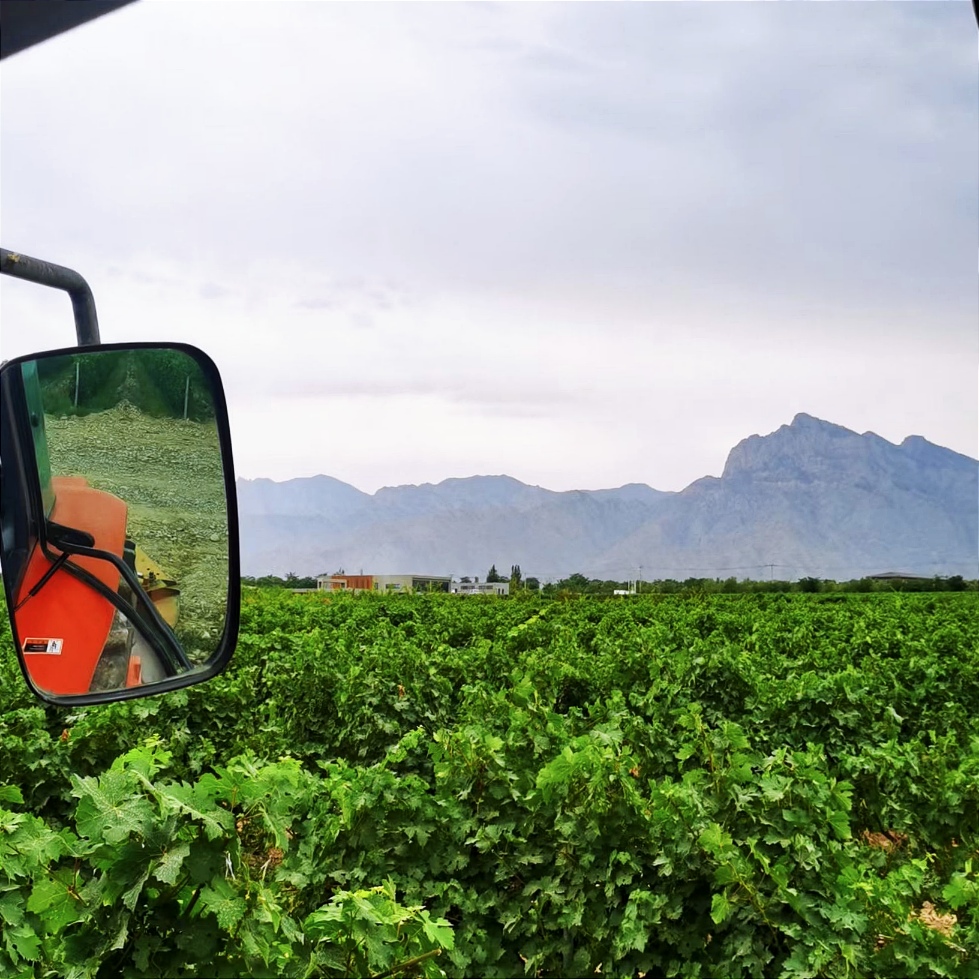
Back to what challenges we see for these three varieties. First, the rain and climate are going to be more challenging. We have more and more rain in Ningxia.
For example, we had continuous rain in 2024 during the harvest season, when we lost almost 70% of our yield. This year, the rain came a bit before the harvest season for the majority of varieties but did cause us to lose almost 50% of our Pinot Noir. The other varieties were not dramatically influenced as we had less rain in the later period.
In general, all of these varieties have encountered big challenges due to climate change, but Pinot Noir is more vulnerable because the skins are thinner and it is more influenced by rain.
Malbec might be an issue as well because we need more sunshine. Less sunshine will influence the flavor, I think.
Marselan is closer to Cabernet Sauvignon. We are going to give it more time to grow. In prior years, we actually did not remove any leaves to avoid too much direct sunshine and heat, so we could get more acidity and not too much sugar. But we started to remove some leaves prior to harvest. We are going to have to adjust.
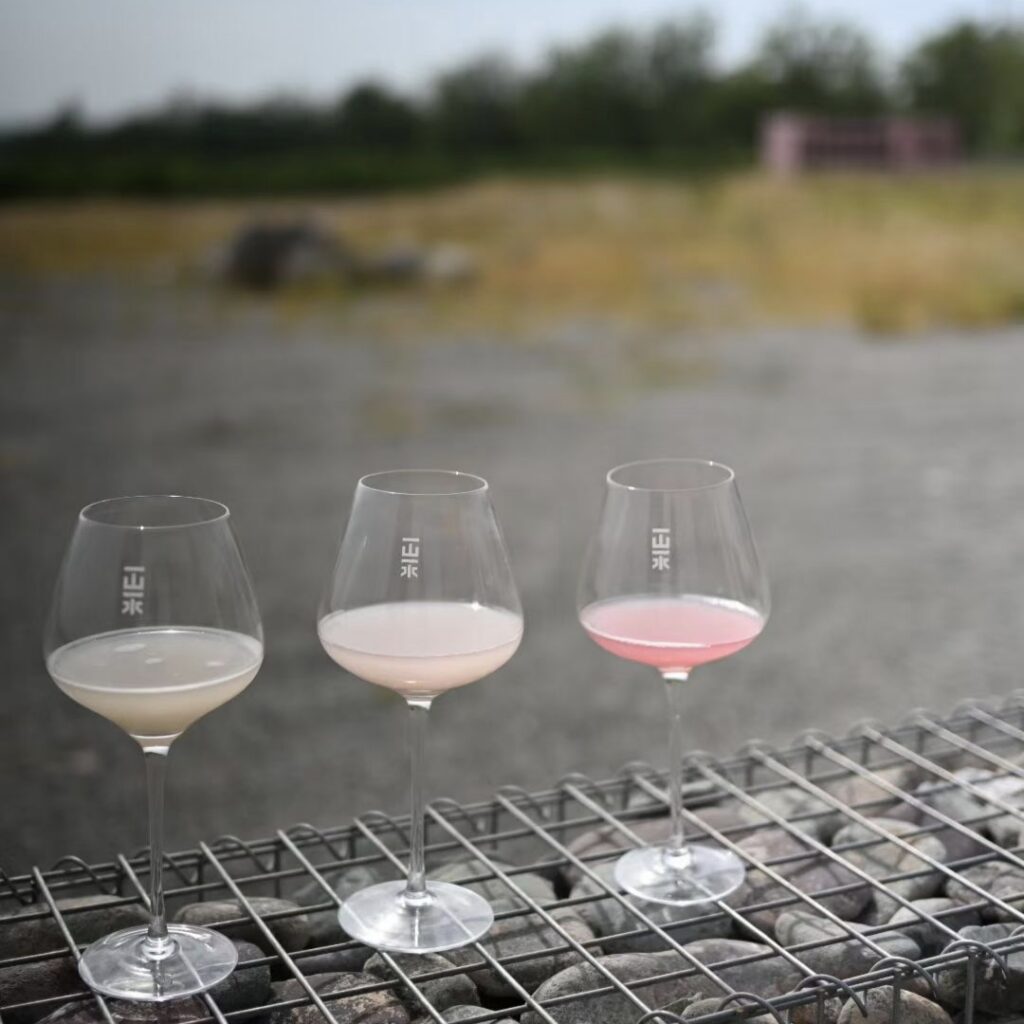
4 Mountain Wave ranks among a rising number of wineries making pet-nat, including Malbec, Marselan and Pinot Noir versions. What inspired this expansion into bubbly and which pet-nat is most popular?
We made 900 bottles of Pinot Noir pet-nat in 2020 for the Year of the Rat [in 2021]. We made it for two reasons.
One is that we were trying to make still wine with our Pinot Noir but ended up converting it to pet-nat. The other is that the market, especially the younger generation, showed an appetite for easy-drinking wines, especially for parties and gatherings.
In 2023, we made four pet-nats—Marselan, Malbec, Pinot Noir and a blend—for Year of the Dragon. The idea was to learn about the different characters of these three varieties. We made a gift package with all four.
All four of these wines were fresh and aromatic but we narrowed them down to a Pinot Noir and a blend dominated by Malbec for Year of the Snake [in 2025] and will do the same for the [upcoming] Year of the Horse.
The pet-nat is popular with consumers because it is really fresh and is good for a party atmosphere.
We seal the bottles with crown caps and that allows for easy access. Consumers can just bring it to a place like a barbecue restaurant and ask the owner to put the wine in the freezer or fridge for ten or twenty minutes. It’s easy to open, like a beer. And we don’t add anything—no acidity, no sugar, no water, no sulphur. It’s just a healthier and easier drink.

5 Making quality wine is one thing. Selling it is quite another. What is your strategy for getting Mountain Wave wines into consumer mouths? Online retail? Offline retail? Restaurant sales? Sales at the winery?
This is currently my weakest link. Growing grapes and making wines are essential but selling to the right person is hard, really hard. I have to learn to deal with the market and what customers prefer. It’s really a big big challenge for me.

6 Mountain Wave is in Jinshan aka the Gold Mountain region of Ningxia, which has gained a reputation for quality wine. What distinguishes Jinshan from areas like Hongsipu, Qingtongxia and Yongning?
One possible aspect is that Jinshan is full of small wineries—we are really small at 20 hectares—and focused on good quality wines. Second, and maybe more important, the soil is distinct from other areas because of the high percentage of stones, which offers good drainage and good space for the roots to grow.
7 Ningxia as a whole has also gained a reputation for quality wine these past 15 years. We now see other areas making major gains, such as Shangri-la and Yili. What does Ningxia need to do to keep momentum?
I think it is a really good sign to have reputable areas in Xinjiang and Yunnan that provide good quality wines. They show China can provide different styles, which is a really happy outcome for all customers.
Factors like latitude and how we plant and care for our vines differ in these areas and this is the beauty of wine. We have different terroirs and that means a colorful range of products.

8 Last question! The Year of the Horse will soon be galloping into our lives. What do you have planned for the next 12 months.
The Year of the Horse is coming and we already released our Pinot Noir pet-nat and will release our blended pet-nat in the next ten days.
For the coming 12 months, one fundamental thing is to keep improving our field work. We are also going to be release two Blanc de Noirs, one is purely Pinot Noir and the other is also an unoaked Malbec.
The Blanc de Noir Malbecis is going to be released on April 17—Malbec Day. The Blanc de Noir Pinot Noir is going to be released after at least six to nine months in new oak barrels: I will try to make it for Pinot Noir Day on August 18.

(Get the free Grape Wall newsletter here. Follow on LinkedIn, Instagram, Facebook and Twitter. Grape Wall has no sponsors: help support the mission, including World Marselan Day via PayPal, WeChat or Alipay. Contact Grape Wall at grapewallofchina (at) gmail.com.)
Leave a Reply
You must be logged in to post a comment.