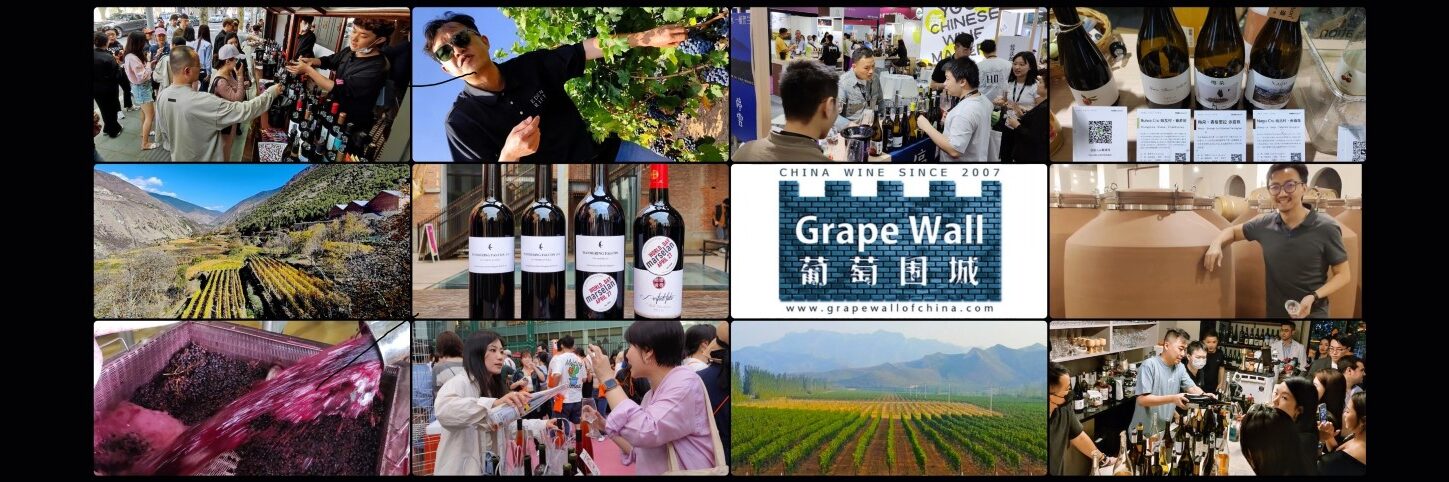
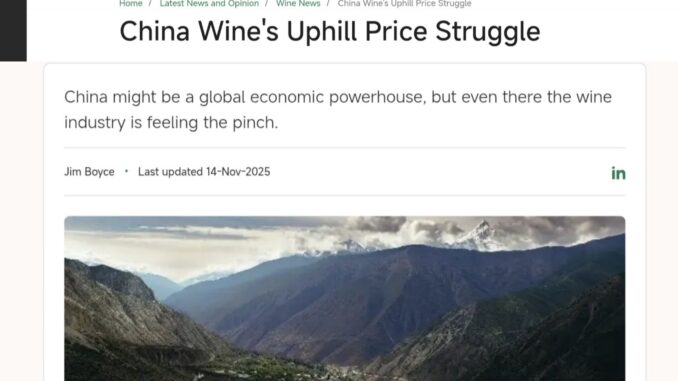
Wine-Searcher just published my story about high prices being cited for poor sales of Chinese wine. The truth turns out to be much more nuanced—and relevant to all wine.
I’ll cover the key points below plus bonus insights from my interviewees with Grace CEO Judy Chan, CAU Professor Ma Huiqin and Senior Editor Shuai Zekun for James Suckling—three unique viewpoints.
Wine Price Tiers
First, many reasons are cited for why imported and local wines see slow sales in China: government crackdowns on expense accounts; sustained cautious consumer spending; a flood of alternative beverages to wine; and younger generations that, in line with global trends, are drinking less; among others.
For local wines, a default response is they are simply too darn expensive. A deeper dive finds a more nuanced reality.
First, some high-priced high-quality low-production wines, including top Yunnan brands, are already fairly priced versus their international counterparts, says wine critic Shuai Zekun.
Second, some consumers actively seek wines with higher prices, especially for gift giving, as Grace’s Judy Chan found via requests from her customers.
Third, the range from RMB150 / USD20 to RMB500 / USD70 is crowded and it is difficult for brands to stick out. This is also where a new wave of wines featuring lighter profiles, non-Bordeaux varieties and styles like skin contact, pet-nat, noir de blancs and so on, are active. Sales are not yet huge but these wines are attracting curious consumers who drink for taste.
Entry-level Wines
That brings us to the low end, one we might place between RMB100 / USD14 and RMB10 / USD1.5 per bottle. But even here, local wine is increasingly competitive, including from mass producers like GreatWall and Changyu, which are also seeing quality gains, says professor Ma Huiqin.
And Chen Zihao, founder of importer / distributor GVS, gives the example of local brand Xiaoman and its range of wines under RMB100, including a sparkling rose muscat that did very well in one of my tastings. Other local brands in this space include Mulando, Petit Mont, Helan Mountain (Pernod Ricard) and Grace.
Thus, Chinese wine is finding a place at all price levels, but slowly, partly due to a lack of awareness: older consumers associate Chinese wine with the crappy stuff of their youth; younger consumers are more-openminded but have limited spending power.
For more on those themes, check the Wine-Searcher story. And for a wealth of extra insights from Shuai, Chan and Ma, see below.
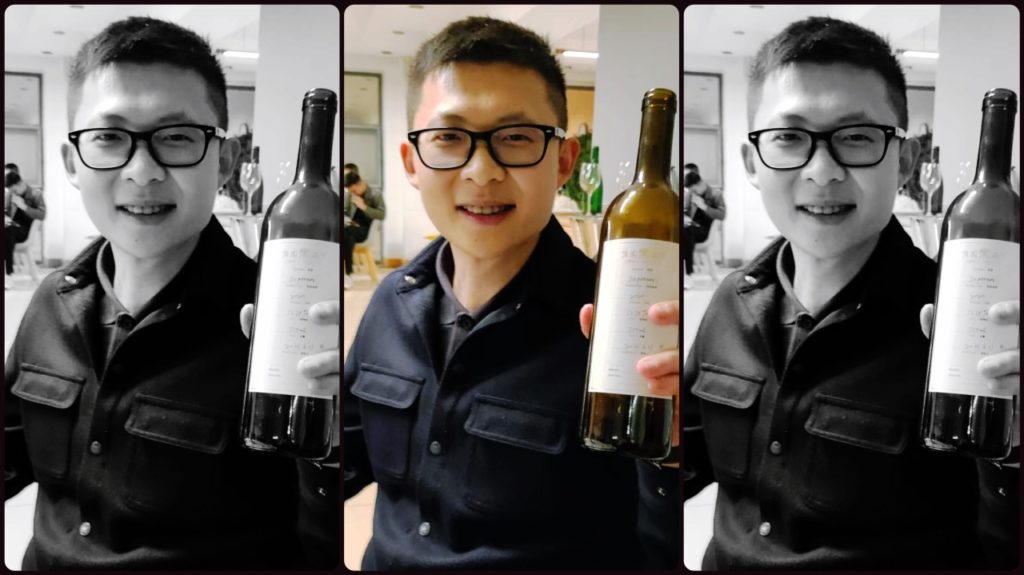
Shuai Zekun
Senior Editor, James Suckling
On Pricey Chinese Wines
“[In the Top 100 Wines of China] there is big segmentation of prices. Yunnan is definitely getting more expensive, and I think the top wines there deserve to be even more expensive. They are kind of 1000 bottles [of production] each and priced at about [RMB]1500, if you look at Mingyi or Xiaoling, those great Chardonnays.
“If you compare them with top Burgundy, the Premier Crus and Grand Crus, the quality is very similar and the prices are actually attractive. The price of those wines could go even higher.
“But for most Chinese wines, I think the pricing needs to change, I they are too expensive in general, especially the ones from Ningxia. On the other hand, there are a lot of good attractive wines under RMB200.”
On Less Expensive Options
“[Under RMB100] is not the stronghold of China. It’s a price point where you are basically looking for wines you just open and drink, and don’t think too much about quality. I think the better price point for China is from RMB100 to RMB250. That’s a reality and that makes China quite expensive.
”I don’t think any country can compete with Spain and Chile, and maybe Argentina, those have the best value for money. But if you compare Chinese wine with American wine, I think they’re not bad starting from RMB100.
“You can get very good stuff, at 91 points or 93 points, and for us 93 points means excellent quality. Like the Petit Verdot and Malbec from Silk Road. And I gave 93 points to the Tangting Xialu Winery Cabernet Gernischt and it’s [RMB150 or less]—it was number 10 in last year’s Top 100.”
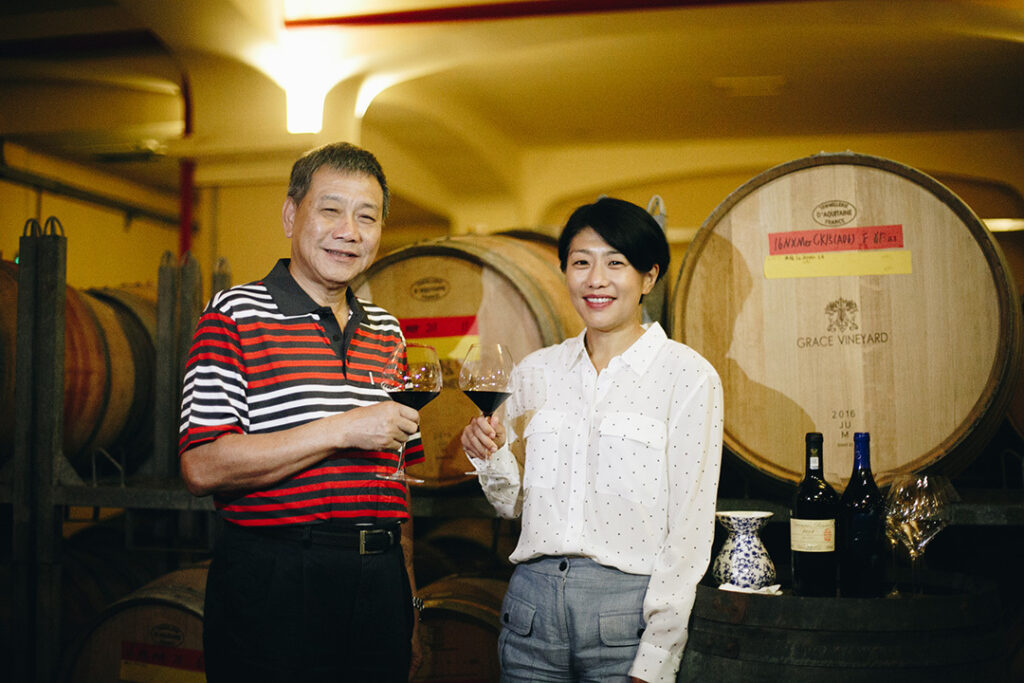
Judy Chan
CEO, Grace Vineyard
On Market Diversity
”I think [price] is a really difficult question because different prices are tailored to different people or to the same people in different situations. When people drink for themselves, they tend to drink more reasonably. When they drink with clients, they are more willing to splash out money.”
(Note: To demonstrate the point, Grace’s key label Deep Blue retails at ~RMB350 / USD70 and might be a regular go-to for entertaining for some people but for others be a personal favorite indulged in only for special occasions.)
On Status Buying
”Years ago, our clients kept telling me that our wines were too cheap, our Chairman’s Reserve at the time was around RMB500 (USD70), or even less than that, and they felt it was too cheap for them to give as a gift. The purpose is giving [as gifts]. And they are really willing to pay for it.”
(In recent years, Grace has offered an anniversary edition for USD390.)
On Pricing Strategy
”My pricing strategy is basically to try to benchmark our wine with international prices, not with only within China, because wine is widely available around the world. I think it only makes sense to benchmark against wine from around the world.
“Unfortunately, Chinese wine has given the impression to the general public or even to other parts of the world that we are quite expensive. But our entry level is less than 100 RMB [at Grace], I don’t think we are particularly expensive.”
On Competing vs Imports
“The only way that I think Chinese wine can grow is not by price for value. There’s so many wineries in Spain or Portugal with much cheaper wines than China. I think the only way that we can grow is by having a brand that is recognized and accepted by the customer.
“Growing brands take time, especially luxury brands, so how to survive during this period of time is a question that all of the wineries have to deal with.”
On Holding Surplus vs Lowering Prices
“The problem is even if they lower the price, they may not be able to sell, and at the same time they would destroy the brand and the existing price structure.
“Even at half the price, you can’t sell most of your stock. You might be able to sell some but may not be able to solve the problem. But then you have destroyed your brand. That’s the dilemma they face.
“If cheap is the way to sell, everybody can do that. And once people know this is your price, whatever gimmick you can you come up, you can never come back.”

Ma Huiqin
Professor, China Agricultural University
On Niche Wineries
“Quality is obviously very important but we also need to focus on what consumers would like to pay. We can understand that [top-tier producers like] Baozhuang and Ao Yun are boutique wineries with limited supply and good quality. And they get quite a lot of support and backing by wine magazines and wine critics. So, they can have this [high] price.
“I would say for any price point, it is not only the owner’s view but also a kind of negotiation between the consumers and the suppliers—no matter the winery itself or the channel or distributor—to make an agreement on the final price of these wines.
On Mass Market Wines
“At the same time, we need to talk about volume wines in China, about the people who consume say 95% of the total. Then I think price point is a very important issue and we do see the average price of wines changing.
“We see for imported wines, the average price is rising. and we see quality Chinese wines becoming more economical, more affordable. It’s a changing market and there’s always some [producers] that will survive and some that will be out. It is very harsh reality now and people are all making big efforts to to try to be among the survivors.”
On Pricing Flexibility
“Some wines can stay at [RMB]300, some wines can stay at [RMB]3000, but in general, what is the trend, because I think the current economically challenging situation will last for quite a while.
“In general, I think prices will be more flexible. Pricing is not only the price but how it is used to do promotions, like you buy two bottles and get one free or you buy a case and get two bottles free. This is also a kind of price flexibility.”
On Quality Gains
“Chinese wineries have made big progress, not only the boutique wineries, but also big names like GreatWall and Changyu Yu. They have also began to produce very good wines with character.
“Previously they purchased chateaux from Bordeaux or other international wine regions but now they focus on some Chinese regions and on wines with more character and diversified varietals.
“But the way of marketing, the way of the promotion, the way of transferring information from the winery to consumer is also changing. Only those who cope well with consumer change will survive. Those who produce high volumes at high prices and target the government and banquet [sales], I think they will lose some of their market share.”
On Changing Consumers
“My feeling is that from Covid to post-Covid, the consumers changed. New consumers came in, you know people from ages 20 to 25, from 25 to 30, from 30 to 35. Consumers are changing, especially the young consumers.
“There are more hobby drinkers, people who drink for themselves, for their personal enjoyment and for reasons of friendship rather than for a big banquet and to have rich red wines from Bordeaux or to drink for reputation [and status].
“These people are drinking for a different purpose, not to do a lot of ganbei [bottoms up], but to gather freely to taste wine and share ideas. They [are drinking] white wines, natural wines, Chinese boutique wines and sparkling wines—wines with character from wineries and winemakers with their own stories. They do not drink wine for a big name or a big score—they drink for enjoyment.
(Get the free Grape Wall newsletter here. Follow on LinkedIn, Instagram, Facebook and Twitter. Grape Wall has no sponsors: help support the mission, including World Marselan Day via PayPal, WeChat or Alipay. Contact Grape Wall at grapewallofchina (at) gmail.com.)
Leave a Reply
You must be logged in to post a comment.