
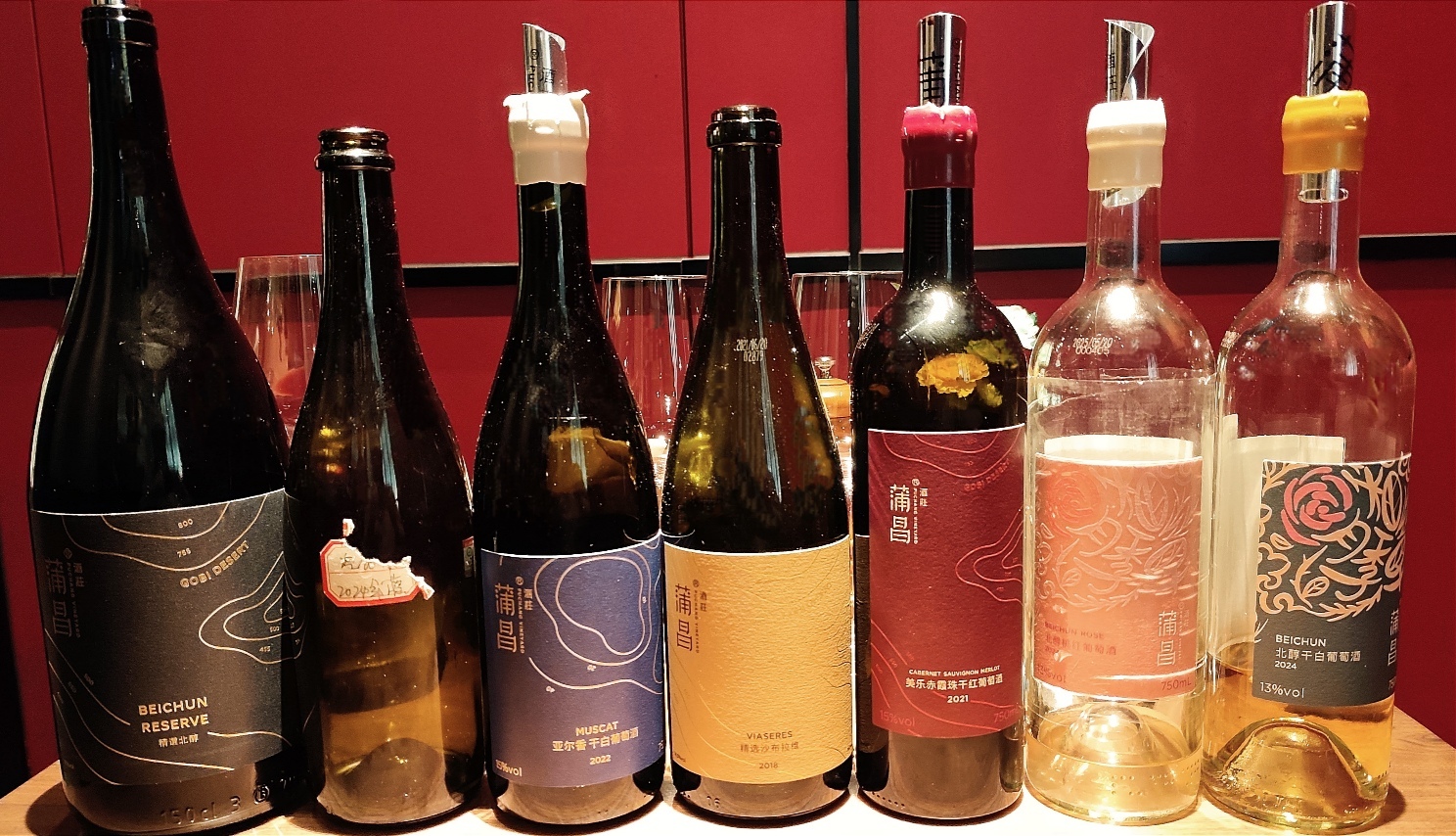
Cabernet Sauvignon is associated with Bordeaux and Pinot Noir with Burgundy, but you can find them side-by-side in the same vineyard—in the middle of a desert—in China.
The winery in question, Puchang in Turpan, also has the Georgian specialties Saperavi and Rkatsiteli as well as the hybrids Beichuan (Vitis Vinifera x Vitis Amurensis) and Rou Ding Xiang (Vitix Vinifera x Vitis Labrusca), with Tempranillo in the works.
Puchang is far from the only winery with eclectic grape mixes. For example, Mountain Wave in Ningxia has Pinot Noir, Malbec and Marselan in its vineyards and blends them for a palatable wine called P.M.M.
Like Mountain Wave, Puchang’s wines are good, notably the Rkatsiteli, which is currently sold out online and often found on top restaurant lists. A skin-contact version ranks among the best wines of that style made in China, IMHO.


In any case, I joined a lunch hosted by Kevin Yang and winemaker Loris Tartaglia of Puchang to try some wines, including:
—A Rkatsiteli pet-nat, a fresh and fun first for me.
—A Beichun Reserve, a blend of the 2013, 2014, 2015 and 2016 vintages revealing a wide range of aromas and flavors: dark plum, graphite, Italian herbs, smoke and more.
—A delicious Saperavi that paired well with the yangrou chuanr / mutton kebabs, served with the freshest flatbread I’ve had in ages.
I appreciated that Puchang didn’t shy away from presenting the wines—both white and red—with spicy dishes.
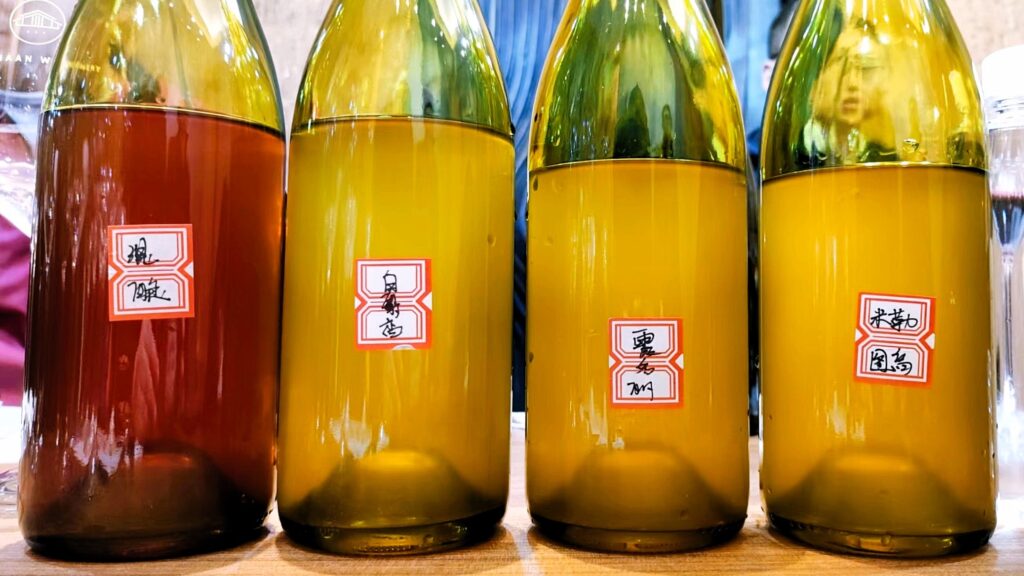
For me, this underscores the experimental nature of many wineries, including leading ones, in a market that at one point seemed destined to only make Bordeaux-style barrel-aged wines.
Grace Vineyard, for example, has been adding more non-Bordeaux grape varieties. Grace is already selling Aglianico and Sangiovese wines and will soon be adding Nebbiolo, Saperavi and Tempranillo.
Canaan is another. While next-door sibling winery DFC is known for Marselan and Petit Manseng, Canaan is not only making good Syrah, Merlot, Pinot Noir, Chardonnay and Riesling but also dabbling in varieties such as Muller-Thurgau and Ehrehfelser. It also released a wide range of low-volume orange wines during these past few years.
This continued exploration of what works for China’s wineries is a major positive in a tough market.
(Get the free Grape Wall newsletter here. Follow on LinkedIn, Instagram, Facebook and Twitter. Grape Wall has no sponsors: help support the mission, including World Marselan Day via PayPal, WeChat or Alipay. Contact Grape Wall at grapewallofchina (at) gmail.com.)